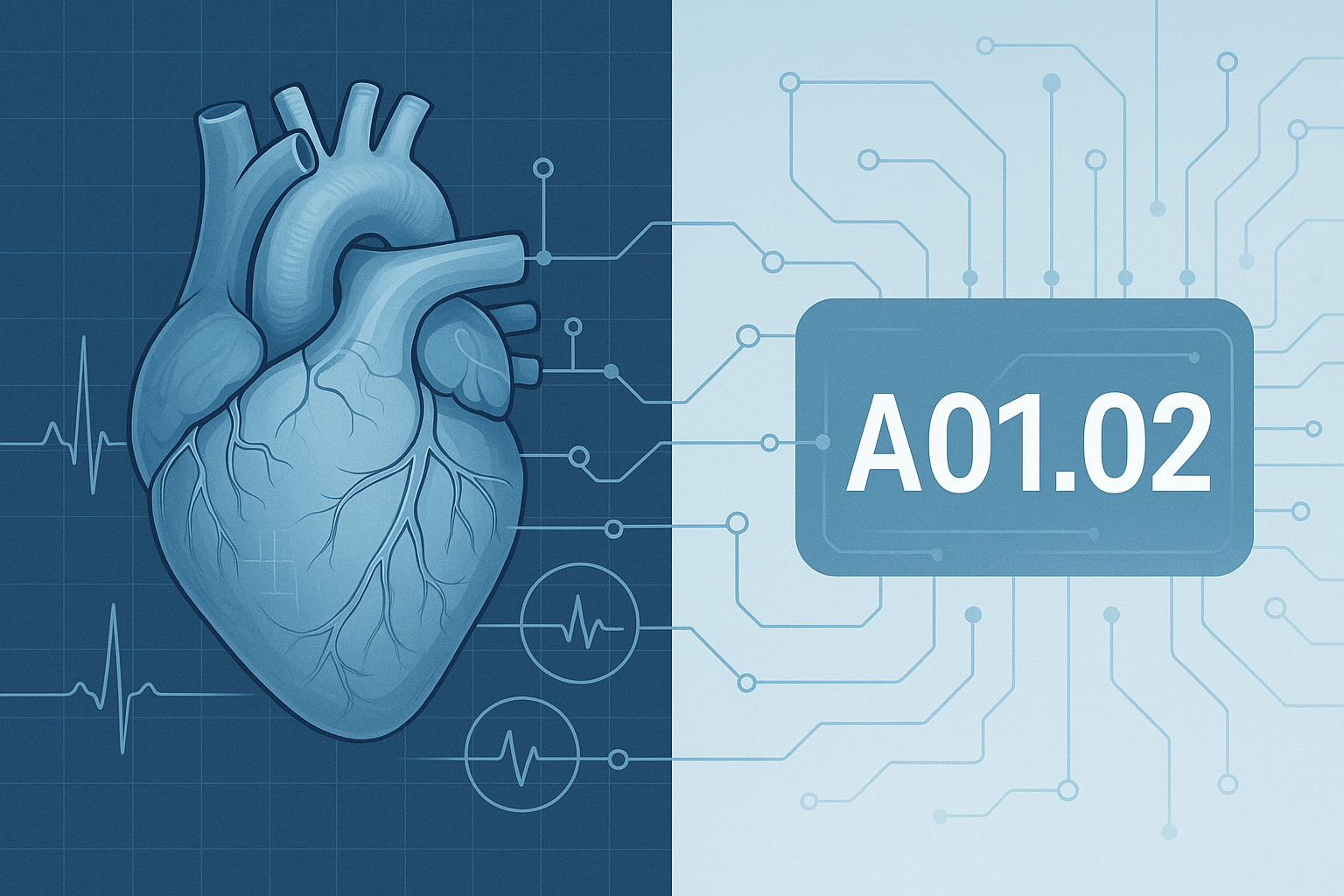
You know that feeling when you’re putting together a puzzle, and suddenly you find that one missing piece that makes everything click? That’s exactly what ICD-10 codes do for healthcare professionals—they’re the missing pieces that complete the patient care puzzle. Today, we’re diving into one particularly fascinating code: A01.02 – Typhoid Fever with Heart Involvement.
What’s the Deal with A01.02?
Think of ICD-10 codes as the GPS coordinates of the medical world. Just like you wouldn’t tell someone “meet me somewhere in California,” you can’t just say “patient has fever.” You need precision. A01.02 specifically identifies typhoid fever when it affects the heart, distinguishing it from other typhoid complications like meningitis, pneumonia, or arthritis.
It’s like having different folders on your computer—you wouldn’t throw all your files into one massive “stuff” folder, right? The same logic applies here.
Breaking Down the Code (It’s Easier Than You Think!)
Let’s decode this medical hieroglyph:
- A = Certain infectious and parasitic diseases (think of this as the “bugs and germs” category)
- 01 = Typhoid and paratyphoid fevers
- .02 = The specific complication: heart involvement
See? It’s basically a filing system that would make Marie Kondo proud.
Why Should Medical Billers Care?
Here’s where things get real. Using the wrong code is like ordering a pepperoni pizza and getting charged for a supreme—you’re paying for toppings you didn’t get (or worse, not getting reimbursed for what you actually provided).
Cardiac involvement in typhoid fever isn’t just a footnote in medical textbooks—it can be a serious complication that requires careful monitoring. When you use A01.02 instead of the general typhoid code (A01.00), you’re painting a more accurate picture of:
- The severity of the patient’s condition – This isn’t your run-of-the-mill typhoid
- The resources used – Heart monitoring, additional tests, specialized care
- The treatment complexity – More intensive management required
The Real-World Impact: More Than Just Numbers
Let me paint you a picture. Imagine a 25-year-old traveler returns from South Asia with what seems like typical typhoid symptoms—fever, abdominal pain, the usual suspects. But then their heart starts acting up. They might develop chest pain, abnormal ECG readings, or even signs of heart inflammation.
This is where A01.02 becomes your best friend. It tells the entire story:
- The insurance company understands why there are cardiac enzyme tests
- The hospital sees why the patient needed extended monitoring
- Future healthcare providers know this patient had a complicated course
It’s like leaving breadcrumbs for the next person on the trail—except these breadcrumbs are vital clinical information.
Common Billing Mistakes to Avoid (Learn from Others’ Oops Moments)
Mistake #1: Using the Unspecified Code Don’t default to A01.00 (Typhoid fever, unspecified) when you have documented heart involvement. That’s like saying “I have a car” when you actually own a Tesla—you’re underselling the situation.
Mistake #2: Forgetting Supporting Documentation ECG changes, elevated cardiac enzymes, or echocardiogram findings are your proof. Code A01.02 without supporting documentation is like claiming you climbed Everest without photos—technically possible but hard to prove.
Mistake #3: Missing Related Codes Heart involvement often means additional codes for specific cardiac conditions. Don’t forget to code the myocarditis, arrhythmias, or other cardiac manifestations separately when documented.
The Clinical Context (Why Doctors Choose This Code)
Here’s something fascinating: Cardiac involvement in typhoid fever can range from minor ECG changes to serious complications like myocarditis. The frequency varies in studies, but it’s definitely not rare—which is why having this specific code matters.
Patients with delayed treatment are more likely to develop cardiac complications, making early recognition and proper coding even more critical. When billers use A01.02 appropriately, they’re contributing to better data on:
- How common these complications really are
- Which patient populations are at highest risk
- What treatment approaches work best
Tips for Getting It Right Every Time
Think of coding like baking—you need the right ingredients in the right order:
Step 1: Verify the Diagnosis Look for documentation of both typhoid fever (positive cultures or serology) AND cardiac involvement (ECG changes, elevated troponin, echocardiogram findings, clinical myocarditis).
Step 2: Check the Timeline Is the heart involvement happening during the acute typhoid infection? That’s A01.02 territory.
Step 3: Document, Document, Document If it’s not written, it didn’t happen. Make sure the provider has clearly documented both conditions.
Step 4: Query When Needed Unsure? Ask! A quick clarification from the provider beats a denied claim every time.
The Bigger Picture: Why Accurate Coding Matters
Every time you correctly use code A01.02, you’re doing more than just processing a claim. You’re:
- Contributing to epidemiological data that helps track disease patterns
- Ensuring patients get appropriate care coordination
- Supporting research on rare complications
- Protecting your facility from audit risks
It’s like being part of a massive, interconnected healthcare ecosystem where your small action creates ripples of positive impact.
Quick Reference Guide
Use A01.02 when you see:
- Confirmed typhoid fever (Salmonella typhi positive)
- PLUS documented cardiac involvement such as:
- Myocarditis
- ECG abnormalities
- Elevated cardiac markers
- Echocardiogram changes
- Heart failure secondary to typhoid
Don’t use A01.02 for:
- Typhoid without heart complications (use A01.00 or other specific A01 codes)
- Cardiac issues unrelated to the typhoid infection
- Suspected but unconfirmed cardiac involvement
Wrapping It Up
Medical coding isn’t just about memorizing numbers—it’s about understanding the story behind each code. A01.02 tells us about a patient who faced not just a serious infection, but one that reached their heart. It’s specific, it’s important, and when used correctly, it ensures everyone in the healthcare chain has the information they need.
Remember, every code you enter is a pixel in the bigger picture of healthcare. Make sure yours are crystal clear.